


What Is Happening in Minnesota Signals a Deeper Crisis Inside the United States
For years, Americans told Europeans that the United States was a constitutional democracy governed by civilian oversight, judicial restraint, and a clear separation between civil administration and armed enforcement. That distinction is now eroding in plain sight.
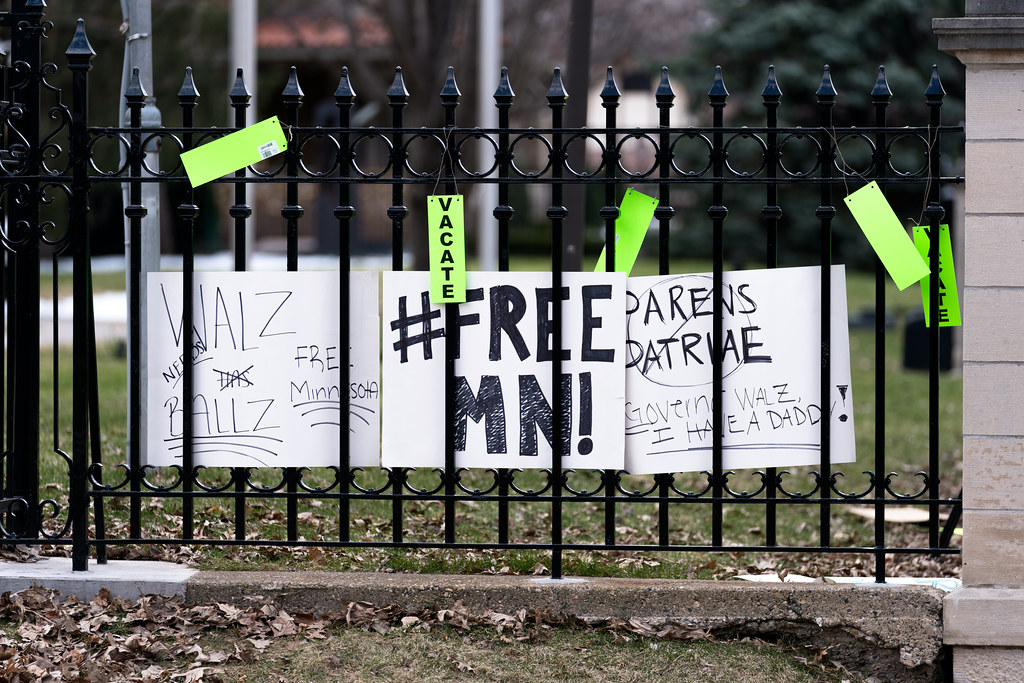
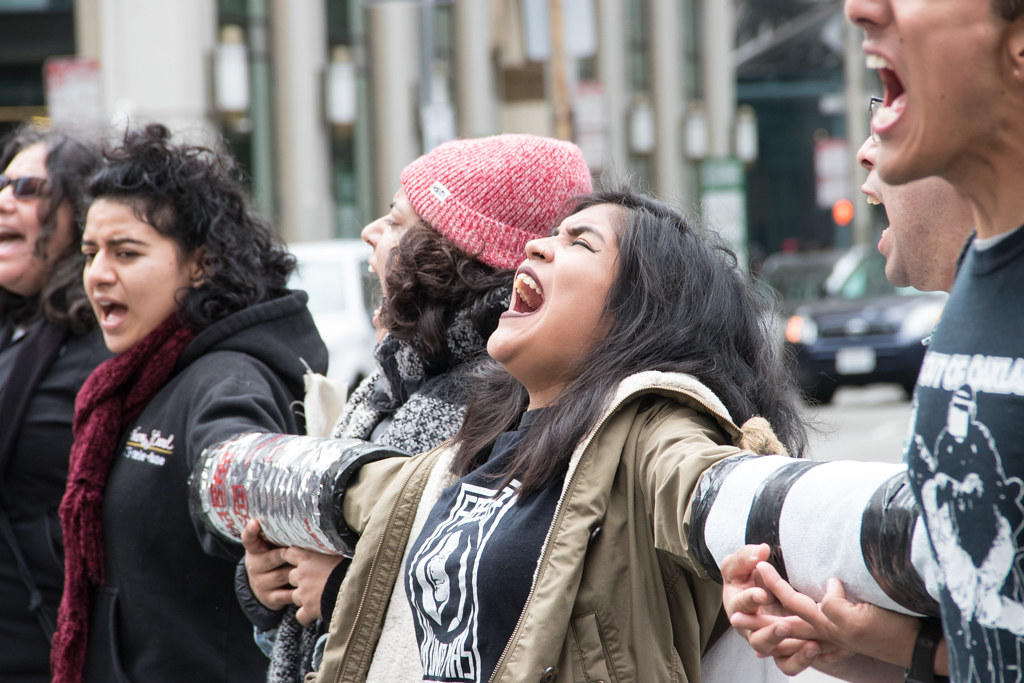
In Minneapolis and across Minnesota, the streets today resemble something closer to a security environment on high alert than a typical American city. Federal immigration agents patrol neighbourhoods days after the fatal shooting of Renée Nicole Good by a U.S. Immigration and Customs Enforcement (ICE) officer, an incident that ignited protests, vigils, and a statewide strike. Thousands have marched through city streets in bitter winter cold, confronting lines of federal agents outside the Whipple Federal Building and along major downtown avenues. Uniformed officers, some armed and flanked by riot gear, stand near crowds blowing whistles and chanting for ICE to leave Minnesota. Makeshift memorials cluster at the intersection where Good was killed, a reminder of how quickly a routine neighbourhood can become contested ground. Residents describe everyday public life transformed into something that feels closer to occupation than ordinary civil order.
What Is ICE?
U.S. Immigration and Customs Enforcement (ICE) is a federal agency created in 2003 following the September 11 attacks. Unlike border police, ICE operates inside the United States, far from ports of entry. Its mandate includes arresting, detaining, and deporting non-citizens for immigration violations.
ICE officers are armed. They conduct raids, transport detainees to federal facilities, and operate with wide discretion. What is less widely understood outside the United States is that American immigration enforcement has not developed in isolation. Senior U.S. law enforcement officials, including federal counterparts connected to ICE, have participated for years in international training and exchange programmes with Israeli security institutions linked to the Israel Defense Forces, typically through security partnerships and exchanges rather than direct military instruction. Human rights organisations have long warned that these programmes risk transferring security, surveillance, and crowd-control doctrines developed for military contexts into civilian law enforcement.
That combination of immigration authority, armed enforcement powers, and security-driven doctrine creates an agency that increasingly resembles an internal security force rather than a civil immigration service, operating with military-style tactics in civilian spaces and with limited public accountability.

Renée Nicole Good: The Woman Whose Death Changed the Story
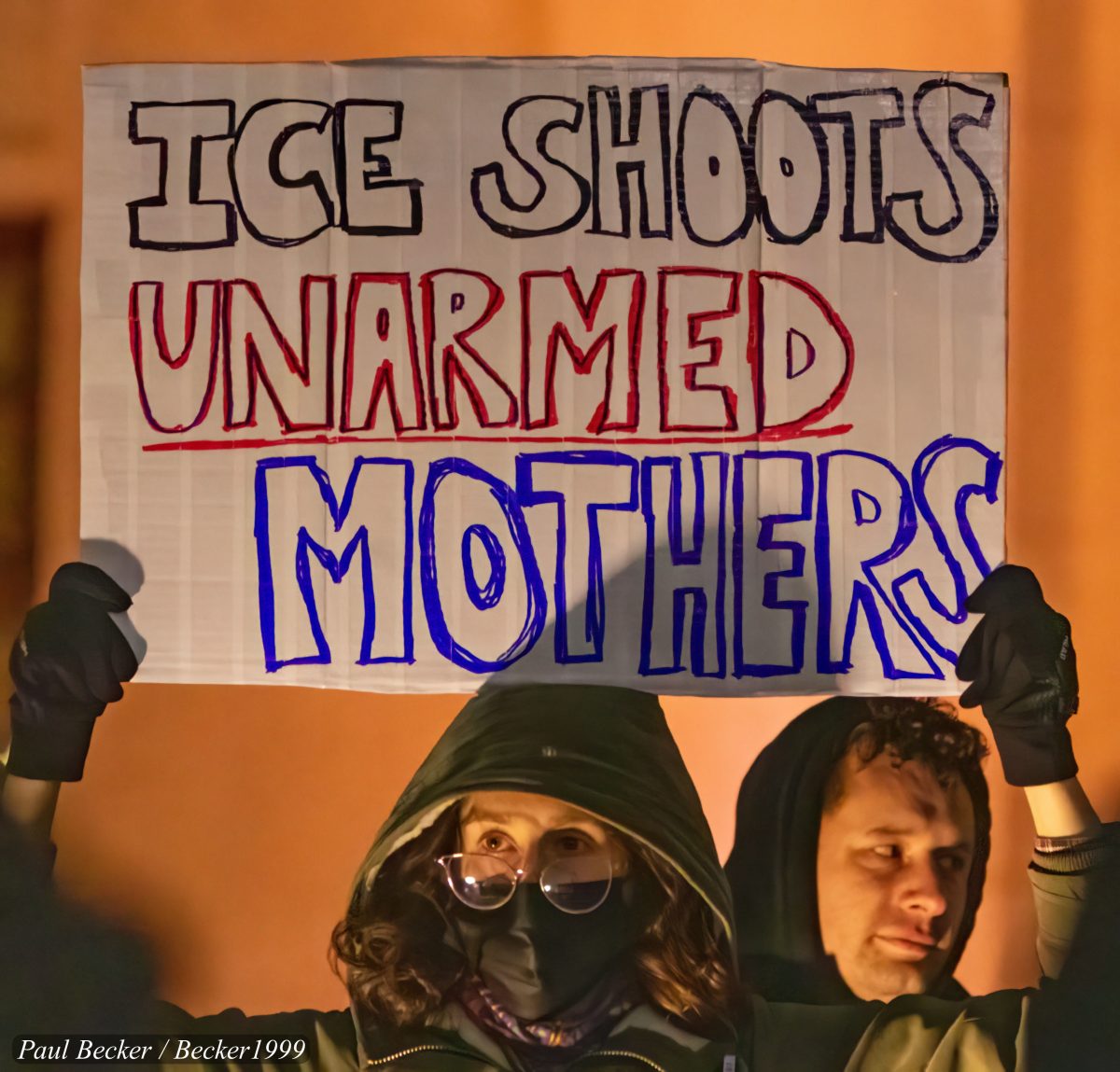
At the heart of public outrage in Minnesota is Renée Nicole Good, a 37-year-old American citizen and mother of three who was shot and killed by an ICE agent in Minneapolis on January 7, 2026. Good was not a migrant. She was a local resident who lived with her partner and children in the city. Her death occurred during heightened federal enforcement operations in the area and was widely filmed and shared.
Federal officials have defended the officer’s actions, claiming that Renée Good drove her vehicle toward ICE agents and that the use of force was justified as self defence. U.S. Senator JD Vance echoed that narrative publicly, warning against what he described as politicising the incident.
Those claims are disputed by local officials, eyewitness accounts, and video evidence showing Good’s vehicle moving away from agents at the moment she was shot. The Hennepin County Medical Examiner ruled her death a homicide, and independent autopsies commissioned by her family documented multiple gunshot wounds, including a fatal head wound. The findings intensified scrutiny over use of lethal force, federal law enforcement accountability, and immigration enforcement operations inside civilian communities.
Good’s killing became an inflection point. Protests erupted not only over immigration enforcement tactics but over the use of deadly force by a federal agent against an unarmed civilian inside a U.S. city.
Protests, Strikes, and Judicial Intervention
Minnesota’s response was swift and unusually broad. Labour unions, faith leaders, civil rights organisations, and community groups organised sustained protests and economic strikes. Clergy were arrested at the state’s international airport, a moment that crystallised growing concern over federal immigration enforcement. Teachers, healthcare workers, and service employees took part in walkouts, while demonstrators demanded accountability, transparency, and an end to the ICE enforcement surge.
At the same time, fear began to centre on schools. Parents, educators, and local volunteers reported ICE agents operating near school grounds, prompting districts to alter routines and families to keep children home. Immigration and Customs Enforcement has denied entering schools or targeting students, stating that operations occurred in public spaces and were directed at adults.
Yet eyewitness accounts and widely circulated video footage show chaotic arrests near residential and community spaces, including images that appear to show a visibly pregnant woman being dragged across the ground during a detention. Federal authorities have not publicly addressed that incident in detail. The widening gap between official statements and community testimony has deepened mistrust, particularly among families who say the presence of armed federal agents near schools has disrupted daily life and left children afraid to attend class.
A federal judge intervened, citing constitutional concerns related to arrests and the treatment of protesters. Portions of those protections were later stayed on appeal, allowing enforcement actions to continue. This was not a marginal movement. It included legal residents, U.S. citizens, unions, religious leaders, and municipal officials, reflecting a profound breakdown of trust between federal power and local communities.
Enforcement Without Transparency
Federal officials continue to frame ICE operations as lawful and necessary, insisting that agents are enforcing immigration law and protecting public safety. What they have not provided is a clear, independent accounting of how enforcement decisions are made or how use of force is regulated in practice. Courts and civil rights organizations have repeatedly pressed for transparency, even as federal authorities appeal judicial limits on what tactics agents can use.
Key questions remain unresolved and urgent:
Under what authority are armed federal agents entering residential buildings when local police are not present and no judicial warrant has been disclosed? Recent reporting indicates that agents have relied on administrative warrants to enter homes without prior judicial approval, raising constitutional concerns about warrantless entry.
What standards govern lethal force in civil immigration contexts, especially when encounters involve civilians engaging peacefully or carrying out daily routines? The fatal shooting of Renée Good, who was unarmed and a U.S. citizen, during a federal operation has prompted federal civil rights complaints and lawsuits calling for clearer rules of engagement.
How are warrant requirements interpreted or bypassed, particularly when internal memos appear to grant agents authority to make forcible entry without judicial review? Those policies are now under legal scrutiny in Minnesota courts.
What independent oversight mechanisms exist when federal agencies operate inside local jurisdictions with minimal coordination, wear no public identifying information, and face allegations of racial profiling from local law enforcement leaders? Local chiefs have publicly criticised the tactics of immigration agents, saying they erode public trust and exceed authority.
These questions are not abstract technicalities. They go to the heart of constitutional due process, civil liberties, and democratic checks and balances. They are foundational safeguards in any democratic system.
European observers have lived these debates in real time through clashes over bodies like Frontex, the expansion of emergency powers, and the gradual normalisation of exceptional security measures in border enforcement. What distinguishes the United States is not the underlying logic but the velocity. In America, these powers have expanded faster, with fewer brakes, and with far less public reckoning.
Europe Is Warning the United States, and America Is Struggling to Hear It
Across Europe, the reaction to what is unfolding in Minnesota is not confusion. It is recognition.
Legal scholars, journalists, and human rights observers are no longer speaking in hypotheticals. They are warning explicitly that theUnited States is entering a phase of accelerated democratic backsliding. Members of the European Parliament, along with UN special rapporteurs and European human rights institutes, have issued unusually direct assessments of the United States, citing the erosion of judicial independence, the politicisation of law enforcement, the expansion of emergency-style powers, and the criminalisation of protest.
What alarms European observers is not any single policy, but the speed. Measures that once would have triggered a national crisis are now absorbed as routine governance, while dissent is increasingly framed as disorder rather than as a democratic warning.
The alarms are urgent.
Inside the United States, however, those warnings often go unheard. Geographic distance, political exceptionalism, and an inward-looking media ecosystem have isolated many Americans from the global conversation about democratic resilience and democratic erosion. Even those who recognise what is happening and attempt to resist it from within are frequently told that what they are witnessing is not real, that they are exaggerating or losing perspective. Their alarm is dismissed as hysteria, partisanship, or conspiracy, rather than treated as an early warning from inside the system itself.
From outside the United States, the danger is visible. From within, it is often obscured by polarisation, denial, and the insistence that nothing fundamental has changed.

