


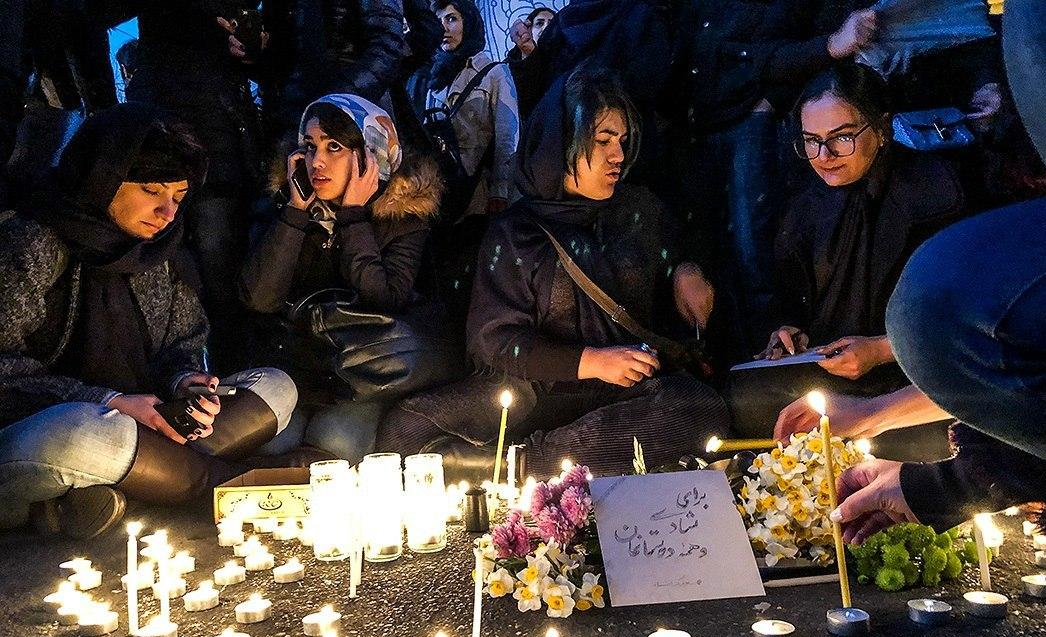
Forty days after young protesters were killed in Iran, families gathered to mourn.
Instead, they chanted.
In cities across the country, memorial ceremonies marking the 40th day after the deaths of January uprising protesters transformed into public demonstrations against the Islamic Republic. What should have been religious closure became political continuation.
But beneath the chants against Supreme Leader Ali Khamenei, another struggle is unfolding- a battle over who gets to define Iran’s future if the current regime weakens.
This is not just a protest story. It is a power story.
40th Day Memorials Become Protest Sites
In Shi’a Islamic tradition, the fortieth day after a death – known as chehelom – carries spiritual weight. Historically, these mourning cycles helped fuel the 1978–1979 revolution that toppled the Shah.
According to statements released by the National Council of Resistance of Iran (NCRI), 40th-day memorial ceremonies for those killed in the January 2026 unrest turned into demonstrations in Tehran, Mashhad, Abdanan, Zanjan, and other cities.
Parallel messaging from resistance-linked networks across 17 cities emphasized the slogan “Neither Shah nor the Mullah,” underscoring opposition not only to the current clerical leadership but also to any return to monarchy.
Independent verification remains limited due to restricted access for foreign media inside Iran. However, Amnesty International and Human Rights Watch have documented repeated patterns of lethal force, arbitrary detention, and communication shutdowns during past protest waves, including those in 2019 and 2022.
The symbolic shift is significant: mourning is no longer absorbing anger. It is amplifying it.
Reported Execution Surge Amid Unrest
In a separate February statement, the NCRI claims that at least 58 prisoners were executed between February 14 and February 17, 2026, listing names across multiple cities.The organization characterizes the executions as part of an accelerated crackdown amid fears of renewed uprising.
Iran consistently ranks among the countries with the highest number of executions per capita worldwide, according to annual reports by Amnesty International. Historically, execution rates have risen during periods of political unrest.
The NCRI further alleges that a 22-year-old detainee in Bandar Abbas died under suspicious circumstances while in intelligence custody, with authorities reportedly attributing the death to suicide. Similar cases in prior protest waves have raised concerns among human rights organizations about custodial deaths and coercion of families.
While opposition-released figures require independent corroboration, the broader pattern is recognizable: protest escalation followed by intensified repression, arrests, executions, and information control.
The message from the state is deterrence.
Iran’s Opposition Power Struggle
The protests are not unfolding in a political vacuum.
As pressure mounts on the Islamic Republic, competing opposition factions are positioning themselves as viable alternatives. Supporters of Reza Pahlavi, the son of Iran’s former Shah, have gained increased visibility in diaspora networks and online activism. Some advocate for a constitutional framework under his symbolic leadership as part of a transitional process.
At the same time, the NCRI, aligned with the People’s Mojahedin Organization of Iran (MEK), rejects both the current clerical regime and any restoration of monarchy, instead promoting a republic under its own leadership framework.
The slogan “Neither Shah nor the Mullah” reflects a real ideological divide within Iran’s opposition landscape. It signals distrust not only of the Islamic Republic but also of the monarchy-era political legacy.
Recent online discourse, including widely circulated videos, has accused pro-Pahlavi factions of inflating protest narratives and engaging in aggressive tactics toward critics. These allegations remain contested and require independent verification. However, fragmentation within the opposition is visible, particularly across diaspora media ecosystems and social platforms.
In moments of potential transition, unity becomes as critical as dissent. Iran’s opposition remains divided on leadership, structure, and vision.
The Uncertain Road Ahead
If Iran’s political system destabilizes without a unified democratic transition framework, the vacuum could produce internal factional conflict, elite power struggles, or intensified repression rather than systemic reform.
The 1979 revolution replaced one authoritarian structure with another. That historical precedent casts a long shadow over current developments.
Iran’s battle is no longer only about opposing the present regime. It is also about defining what comes next — and who gets to speak for it.
The chants at the fortieth day memorials suggest endurance.
Whether endurance becomes transformation remains uncertain.

