


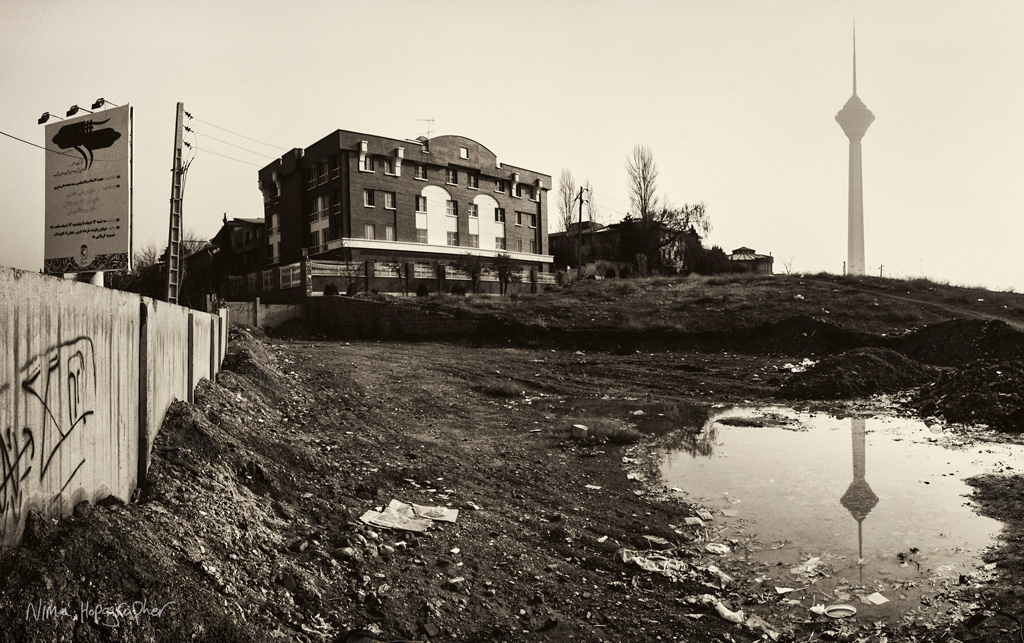
Tehran didn’t wake up choking by accident. Two hundred thousand people don’t pour into emergency rooms in ten days unless something upstream has broken. Or been broken. For weeks, the air across Iran’s capital has worn the color of catastrophe, a gray-yellow haze heavy enough to shut down schools in twenty provinces, spike respiratory illness across the map, and push daily death counts far past what officials want to admit. Another quiet mass casualty event. Another preventable one.
A Slow, Sanctioned Suffocation
Inside the city’s clinics, children cough until they vomit. Elderly patients arrive doubled over, carrying plastic bags of medication that no longer counter the burn. Nurses say the night shifts are the worst. You can feel the weight in the room. You can hear it in the breathing. The morgues tell their own truth. Numbers rising from a daily average of one hundred eighty to two hundred twenty in a single month. Twenty percent. Fifteen thousand lives a year if the trend holds. That’s not smog. That’s a slow, sanctioned suffocation.
Iran’s own outlets have been forced to say the word catastrophe out loud. According to Entekhab, air quality in Tehran has been unhealthy or worse for one hundred twenty nine days this year. Two days labeled hazardous. Two labeled very hazardous. The air is thirteen percent worse than last year. None of this is a coincidence. None of it is weather.
International agencies have warned about this for years. The World Health Organization has called Iran’s winter pollution among the worst in the world. The World Bank has estimated billions in annual economic losses from pollution-driven illness and premature death. Human Rights Watch documented the disproportionate impact on low-income communities, especially in Khuzestan, where children grow up breathing what wealthier families filter out. These warnings didn’t disappear. They were ignored.
A Regime Willing to Poison Its Own People
The sulfur numbers tell the bluntest story. An expert quoted by Entekhab said sulfur levels in diesel fuel used at the Rajaei power plant were five hundred ninety two times higher than the permissible limit. Not five times. Not fifty. Five hundred ninety two. He used the word crime. He was right.
Here is what the officials won’t say. Power plants only burn mazut when natural gas is diverted elsewhere. The military gets priority. Petrochemical giants get priority. Export markets get priority. Ordinary people inhale the leftovers. The Department of Environment has been gutted by budget cuts and political interference. Emission standards exist on paper but not in enforcement. Inspectors are sidelined. Reporting is censored. Data sets disappear from websites overnight.
Behind the smog is a worldview. A wartime mentality that treats bodies as expendable and environmental health as negotiable. Iran’s leaders have spent decades plundering national resources and redistributing wealth toward repression, proxy warfare, and a nuclear program that drains public budgets while public hospitals run out of inhalers. There is a price for that. You see it in ICU admission rates. You see it in school closures. You see it in the eyes of families standing in pharmacy lines at dawn, trying to get ahead of the next wave of bad air.
Tehran’s poorest neighborhoods bear the worst of it. That is always the pattern. Residents closer to highways and aging industrial zones inhale the highest concentrations. Air purifiers hum inside the gated schools in northern Tehran while south Tehran’s classrooms shut for entire weeks. Some winters, students lose a third of their academic year to pollution closures. You can feel a country shrinking inside its own crisis.
People who lived through the Soviet collapse have their own memories of what environmental failure looks like when a government is busy protecting itself instead of its citizens. Smog in Donetsk. Toxic rivers in Eastern Europe. Chernobyl dust drifting past the borders of truth. Iran is not there yet, but the echoes are unmistakable. Environmental collapse is always the soft prelude to political collapse. It shows you where a system has hollowed out. Where the leadership can no longer balance power with survival.
A Crisis That Doesn’t Stay Contained
Officials try to frame the crisis as seasonal. Or inevitable. Or an unfortunate combination of traffic and cold weather. But physics does not bend to spin. Neither does mortality data. Neither do satellite images. NASA’s emissions monitoring consistently shows heightened plumes around power plants when mazut use spikes. These measurements have no ideology. They simply record what burns.
What should unsettle the region is that air does not respect borders. Iran’s pollution combines with dust storms rolling in from Iraq. Particulates drift into Kurdistan. Wind carries toxins across the Gulf. Environmental collapse is the one kind of human rights violation that spreads without permission. Every child breathing this air today will carry its consequences for decades.
And yet the machinery of denial grinds on. Tehran’s municipality issues half-hearted advisories. Officials blame citizens for driving too much. Ministers deflect questions about sulfur content. No one explains why environmental reports have vanished from government sites. No one addresses the diversion of natural gas from civilian to military use. No one addresses why the state encourages petrochemical expansion while hospitals buckle under respiratory emergencies.
This is the truth buried under the haze. You can cover the sky but not the consequences.
Tehran tonight is a city trying to breathe through an invisible hand around its throat. The people know what is happening. The government knows too. You can ignore critics. You can silence newspapers. You can arrest environmental scientists. But you cannot negotiate with lungs. You cannot sandbag a storm you created. You cannot hide a twenty percent rise in death under winter rhetoric.
Environmental neglect is not collateral damage. It is policy. It is violence by another name.
And the air is telling the truth even if the officials won’t.
**These findings were reported directly by the National Council of Resistance of Iran (NCRI).**

