


The Money Won’t Move
In July 2026, Bank Hapoalim and Israel Discount Bank sent word to their Palestinian counterparts: they were done. These are the only two Israeli banks providing the correspondent services Palestinian banks need to clear shekel transactions and support the trade on which the Palestinian economy depends. Together, they process roughly 51 billion shekels, or $16.6 billion, in transactions each year. Without much warning, they said they intended to stop. No more clearing wages for Palestinian laborers. No more settling accounts for merchants trying to import food, fuel, and medicine. No more correspondent banking, full stop. Israel Discount Bank set its cutoff for September 1, with Bank Hapoalim following on October 1, weeks or months away for the people who’d feel it first.
It wasn’t the first close call, and it won’t be the last. For nearly two years now, a slower, quieter crisis has been building underneath the war in Gaza: the basic plumbing that lets money reach Palestinians at all has been breaking down, piece by piece. That’s true whether the money in question is a laborer’s wage, a merchant’s payment for an import shipment, a relative abroad sending cash home, or a humanitarian dollar meant to buy flour. Banks, both Israeli and international, have pulled back from Palestinian finance so broadly that UN experts have started calling it a “financial stranglehold.” Ask why, and it comes down to two things: a banking system built thirty years ago to depend entirely on someone else, and a post-9/11 compliance regime that turned that dependency into a weapon.
A System Built to Have a Chokepoint
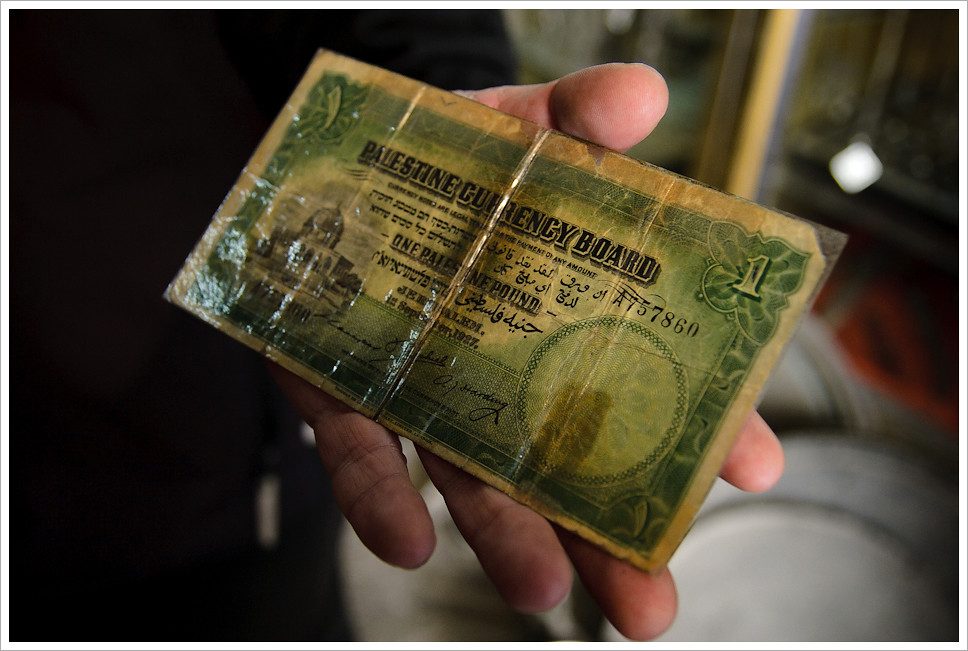
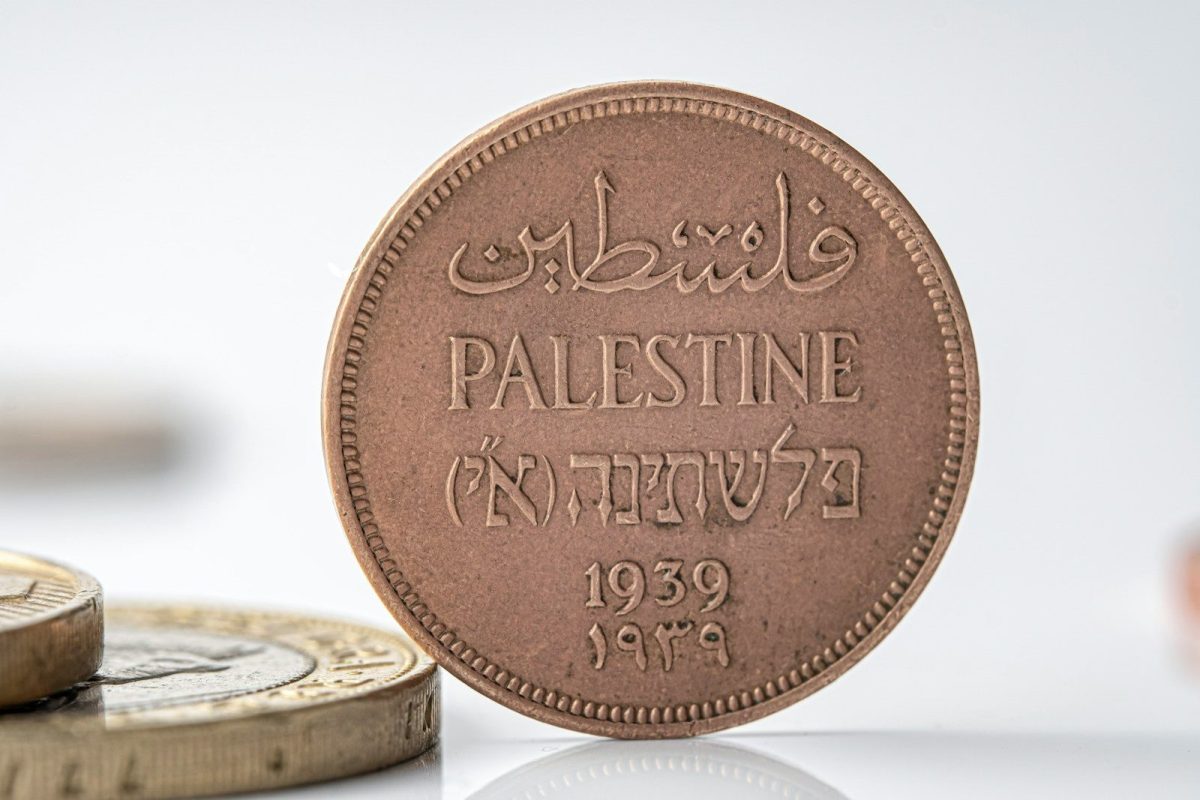
Go back far enough and the vulnerability traces to a single document: the 1994 Paris Protocol, the economic annex bolted onto the Oslo Accords. It made the Israeli shekel the primary currency circulating in the Palestinian territories, set up a Palestinian Monetary Authority that looks like a central bank but was never allowed to issue its own currency, and, critically, left Palestinian banks dependent on Israeli institutions to clear shekel transactions and move surplus cash. The same document handed Israel the job of collecting customs duties on goods headed into Palestinian markets, with a promise to pass that money on to the Palestinian Authority every month.
Three decades on, both of those arrangements have become levers Israel can pull more or less whenever it wants. It has withheld or delayed the “clearance revenues” it owes the PA again and again, at times explicitly using them to punish Palestinian policy moves it didn’t like, and since May 2025 it has suspended those transfers altogether, leaving the PA sitting on an estimated $4.5 billion in withheld funds by the end of that year, money it needs just to pay the public-sector workforce that anchors the West Bank economy. The correspondent banking relationship is the quieter of the two levers, but it’s the more fragile one. It survives only because Israel’s finance ministry keeps signing indemnity letters that shield Israeli banks from terror-financing liability for doing business with Palestinian ones, and those letters have to be renewed, again and again, essentially on the minister’s word. In 2026, under Finance Minister Bezalel Smotrich, they nearly weren’t.
That $4.5 billion isn’t an abstraction sitting in a ledger somewhere; it’s the reason a teacher in Nablus or a nurse in Hebron hasn’t been paid in full. Since November 2021, the PA has been unable to cover full salaries for its own public-sector workforce, and payments have at times been cut to as little as 50 percent of what employees actually earned. By November 2025, the PA owed its own staff $2.5 billion in back pay. That’s not a rounding error; it’s the difference between a family covering rent and a family falling behind on it, month after month, for years. When teachers went unpaid for long enough, the September 2025 school year simply didn’t start on time. A financial architecture that lets one government withhold another’s payroll, and then treats restoring it as a diplomatic favor rather than an obligation, doesn’t just strain a budget. It reaches into people’s kitchens and classrooms.
Why the Banks Say They’re Pulling Back
The banks’ stated rationale is specific: they fear exposure to lawsuits and possible criminal liability under counterterrorism-financing law, in part because of routine dealings with the Bank of Palestine, which for years disbursed the PA’s “martyrs’ payments” for the families of Palestinians killed or imprisoned, a program Israel and the United States classified as incentivizing terrorism. The PA says that program no longer exists: President Mahmoud Abbas ordered it dismantled in February 2025, replacing status-based prisoner and “martyr” payments with a need-based welfare system, with the first payments under the new system disbursed in December 2025. Israeli and US officials remain skeptical that the change is real; the State Department alleged in February 2026 that the PA had simply continued the payments under a different name and that unresolved dispute is itself part of what keeps the banks unwilling to rely on any indemnity that isn’t permanent. The Israeli government has tried to shield the banks with letters of indemnity, but the banks say those protections are temporary and legally uncertain, and they no longer consider them adequate cover. Finance Minister Bezalel Smotrich, an advocate of West Bank annexation, has at times used the waiver itself as leverage, ordering its cancellation before extending it again, most recently to the end of 2026, under quiet pressure from Washington, which fears the collapse would trigger the PA’s financial implosion.
The Palestinian Monetary Authority pushes back hard on the idea that its institutions are high-risk. It’s spent a decade building anti-money-laundering controls up to international standards, and both the US and UK governments have said publicly that Palestinian counterterrorism-financing practices meet or exceed those standards. None of that has been enough, though. Commercial banks answer to shareholders and regulators, not diplomats, and a favorable assessment from Washington or London doesn’t make the risk feel any smaller to an executive who has to sign off on it.
The correspondent-banking dispute is centered on the West Bank and the PA economy, but it is part of a much broader pattern of financial de-risking that also constricts humanitarian work in Gaza. Aid organizations operating in conflict zones depend on banks and payment processors willing to move money into places those institutions have designated high-risk. In July 2026, UNICEF, the World Food Programme, and the Food and Agriculture Organization reported that food security in Gaza had genuinely improved since the October 2025 ceasefire, with the share of the population facing crisis-level hunger or worse falling from 77 percent to 67 percent. But the same agencies were blunt that the gains were fragile and reversible, that funding for the response was running out fast, and that an estimated 74,000 children would still need treatment for acute malnutrition over the coming year. Money delayed or blocked because a financial institution does not want the compliance exposure isn’t money that simply sits somewhere safe. It is money an aid organization cannot use when it needs it, and those delays eventually reach the people waiting at the end of the chain.
In Gaza, the Banking System Itself Is Gone
In Gaza, the crisis is physical as well as regulatory. Israeli strikes have destroyed roughly 95 percent of the Strip’s banking infrastructure, branches, vaults, and ATM networks alike, since October 2023. Israel has also restricted the inflow of new physical currency into Gaza, so the shekels still circulating have grown tattered and scarce, trading at a discount to their face value because there’s no way to replace them. The result, as UN experts described it in September 2025, is a “liquidity crisis”: cooking oil prices rose 1,200 percent and flour 5,000 percent by mid-2025, aid workers reported losing nearly 40 percent of their salaries just to the fees and discounts required to convert digital wages into usable cash, and blackouts routinely take down the mobile-payment apps, like Jawwal Pay and PalPay, that Palestinians increasingly rely on in place of physical banking.
Palestinians in Gaza and the West Bank have also reported banks freezing or closing their accounts with little explanation, the Bank of Palestine, Arab Islamic Bank, National Bank, and Palestine Islamic Bank among them. Reporting by Middle East Eye and others has linked at least some of these freezes to Israeli and Palestinian security screening of incoming wire transfers, cutting account holders off from wages, aid payments, and savings without a clear appeals process.
Behind those freezes are people like Ahmed Sardah, a Gaza resident who was in the middle of transferring money through his bank’s app when he found his account, along with his PalPay and Jawwal Pay wallets, had been shut down. He said a bank employee told him it had been “reserved by management,” with no further explanation and no way to appeal. “We are living in a war of destruction and constant bombardment, and on top of that, we are being strangled,” he told Middle East Eye. “My life has completely stopped; I can’t even pay the rent.” Taghreed al-Daya lost her husband and five of her children in an Israeli airstrike in July 2024. When the death certificate for her eldest daughter, Raghad, was filed, the bank closed the account where Raghad’s salary had been deposited. To claim the funds through inheritance procedures, Daya was told she’d need to travel from Gaza to Ramallah, a trip that is, in practice, impossible for her to make. The Bank of Palestine disputes that the closures are arbitrary and says it follows required legal and regulatory procedures, but Gaza’s bar association has said roughly 700 lawyers were caught up in a wider wave of nearly 2,000 suspended accounts, with no consistent explanation given to any of them.
The Diaspora Can’t Just Wire It, Either
For Palestinians abroad trying to send money home, the obstacles compound, and they’re not limited to Israeli or Palestinian institutions. PayPal, which operates in Israel and in Israeli settlements in the West Bank, does not allow Palestinians in Gaza or the West Bank to link local bank accounts to its platform. Mutual-aid organizers report PayPal freezing donations collected for Palestinian relief, sometimes for up to 180 days, with little explanation. The major card networks have gotten involved too: Visa, Mastercard, American Express, and Discover have all, at various points, cut off donation processing for Palestinian-linked charities and advocacy groups after accusations of terror ties, including cases tied to Israeli government designations the organizations themselves dispute. Each cutoff teaches every payment processor watching that Palestinian causes are a category worth avoiding altogether.
Even when a transfer channel is technically open, actually reaching it in Gaza is its own ordeal. As of mid-2026, less than 10 percent of Gaza’s ATMs and bank branches are operational, despite the October 2025 ceasefire and the Palestine Monetary Authority’s efforts to reopen services. Western Union agents that do operate now mostly deposit money directly into a recipient’s bank account rather than handing over cash, because there isn’t enough cash to hand over. People who need physical currency turn to informal cash brokers, who charge fees that have reportedly run as high as 50 percent just to convert a digital transfer into usable bills. So a relative in Chicago or London can wire money in minutes, and the person it’s meant for can still spend days finding a working agent, a functioning app, or a broker willing to cash them out, and lose a chunk of it either way.
There’s a name for what’s driving this: “de-risking,” a global pattern in which banks, facing steep compliance costs and potentially catastrophic penalties for facilitating terrorism financing under Financial Action Task Force standards adopted after 9/11, simply drop entire categories of customers rather than absorb the risk of getting one wrong. Nonprofits operating in conflict zones are frequent casualties everywhere; Gaza sits at the extreme end. The Charity & Security Network, which tracks this globally, reports that Israeli and foreign banks alike have closed humanitarian organizations’ accounts and delayed or blocked their transactions, pushing more aid money into informal hawala networks, the very unregulated channels that banking rules are ostensibly designed to prevent.
The Diplomatic Tug-of-War
The crisis has become an active diplomatic flashpoint. In late 2024, France, Germany, and the UK jointly called on Israel to urgently renew the correspondent banking waiver, warning of economic collapse in the West Bank. In September 2025, four UN special rapporteurs and independent experts, including the UN’s counterterrorism and human rights expert Ben Saul, accused Israel of using “unjustified de-risking” and financial coercion in violation of its obligations as an occupying power, calling for the waiver’s permanent renewal rather than another round of stopgaps. The United States, wary of a PA collapse that could destabilize the West Bank further, has pushed Israel behind the scenes to keep extending the protections. Under that pressure, Smotrich agreed to extend the Israeli government’s indemnity through the end of 2026. But the government’s extension did not, by itself, withdraw the banks’ September and October termination notices. The government can offer legal cover; it cannot force commercial banks to consider that cover sufficient.
That extension may buy time. It doesn’t fix anything. Palestinian banks remain dependent on Israeli institutions to clear shekel transactions, and every year, that access comes down to temporary government protection and the willingness of two commercial banks to accept it. So the cycle repeats: a deadline creeps up, panic sets in, and a temporary reprieve gets treated like a breakthrough, when really it’s just the same unstable arrangement getting a few more months. And every time that cycle plays out, people find other ways to move money, cash couriers, hawala networks, crypto, whatever gap opens up next, because waiting on a system that might not be there next year isn’t really an option. Those workarounds sometimes keep families fed, but they carry less oversight and fewer protections than the formal banking system they’re replacing, the very system these restrictions were supposedly designed to safeguard.
Diaspora networks, mutual aid organizers, ordinary donors who have never set foot in Gaza, sons and daughters and siblings sending money to their own families: people all over the world have mobilized to get support to Palestinians at a scale that’s hard to overstate. And again and again, that effort has run into the same wall, a PayPal freeze, a declined card, a wire that never clears, a bank that shuts an account down with no explanation. This isn’t a handful of isolated glitches. It’s a pattern, repeating across institutions and borders, and the people on the other end of it are the ones who needed the money most.
When a bank or a payment processor declines to move that money, not because the money is dirty, but because moving it is inconvenient or carries risk it would rather not hold, it is making a choice with life-or-death consequences and calling it compliance.
History has not been kind to that kind of choice. Financial and technological infrastructure is not neutral simply because the people operating it call themselves vendors rather than policymakers. IBM’s punch-card systems helped the Nazi regime catalog and transport its victims with industrial efficiency, and decades later its role is still taught, still investigated, still remembered as complicity dressed up as routine business. The comparison is not one of historical equivalence. It is a warning about the fiction of institutional neutrality: ordinary business systems can help make state violence administratively possible, and the companies running those systems remain responsible for the choices they make.
The institutions quietly standing between the world’s outstretched hands and the people those hands are reaching for are making the same wager: that “risk management” will read, in hindsight, as a neutral technical decision rather than a human one. It won’t. It will be studied, and it will not be forgotten.

Share Your Perspective
Subscribe to Truthlytics today to stay informed and dive deeper into the issues that matter.
Already subscribed? Log in to join the conversation and share your thoughts in the comments below!