


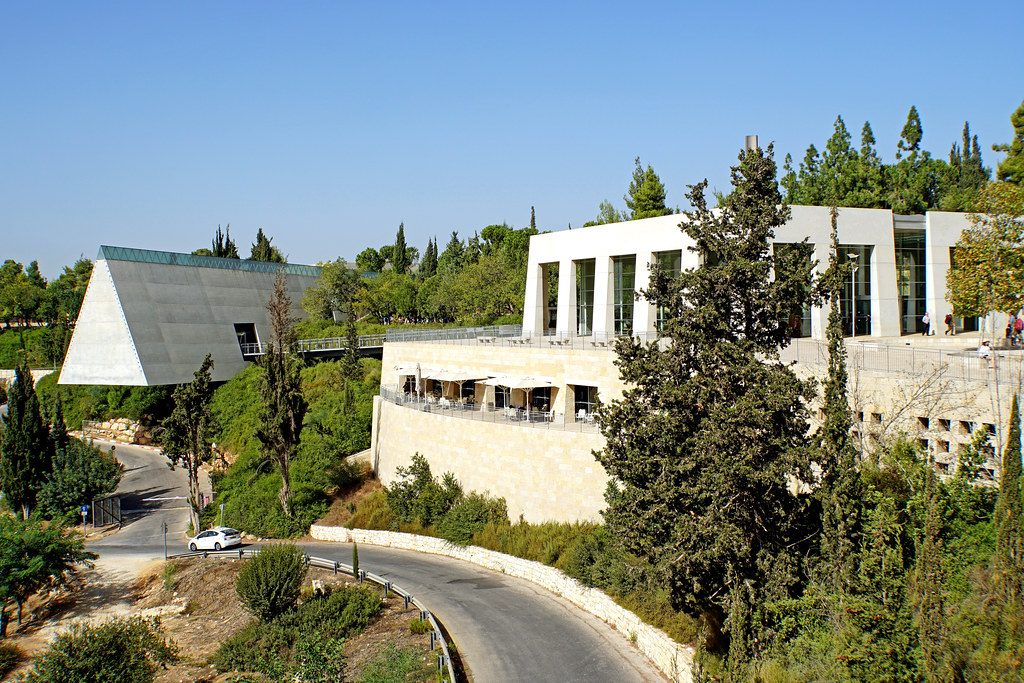
You walk out of the dark.
That is how the Holocaust History Museum at Yad Vashem was designed to end. You spend hours descending through the history of Europe’s destruction, following a concrete prism carved into the mountain, until the tunnel finally opens and you step back into the light of Jerusalem. The city stretches out before you.
I have stood at that exit. I know what it does to you.
And I know that less than a mile away, across the valley, is Deir Yassin.
No tour guide tells you this. There is no placard, no marker, no mention. The ruins of the village are partially visible, absorbed now into the grounds of a psychiatric hospital. Most visitors look out and see a hillside. What they are actually seeing is a massacre site.
Deir Yassin was a village of roughly 750 people perched on a hill west of Jerusalem. Most residents were quarry workers and stone cutters, people who cut the limestone that built the city below them. They had two mosques, schools for boys and girls, and a small collection of shops. They had also, crucially, signed a non-aggression pact with their Jewish neighbors in the nearby community of Givat Shaul. Under the agreement, neither community would attack the other or allow outside forces to use its territory to launch attacks. The pact had been approved at Haganah headquarters, and the villagers upheld their end of it.
On the morning of April 9, 1948, none of that mattered.
Fighters from the Irgun and Lehi, the paramilitary Zionist organizations led by Menachem Begin and Yitzhak Shamir, entered Deir Yassin before dawn. These were not fringe actors who disappeared into history. Within weeks of Israel’s declaration of independence, the militias were formally dissolved and many of their members were absorbed into the newly created Israel Defense Forces. Their commanders entered politics. Begin and Shamir would both become prime ministers of Israel. The Haganah, which provided mortar support during the assault, became the backbone of the new Israel Defense Forces. The institutions that emerged from the 1948 war inherited people, structures, and histories that remain part of Israel’s national story.
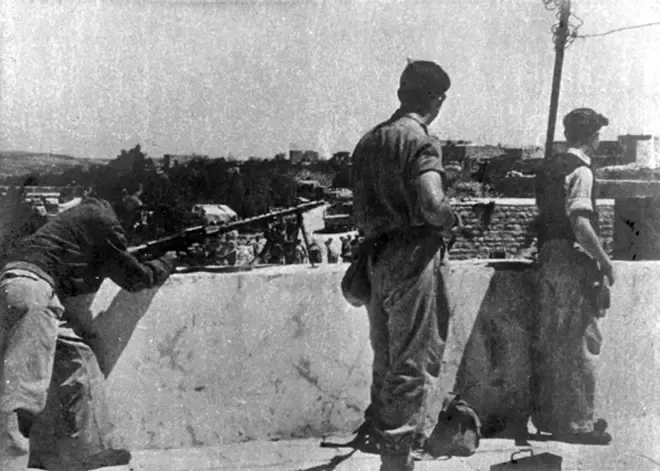
The violence at Deir Yassin was not carried out by a movement that vanished. It became part of the political and military foundations of the state that followed.
They went house to house. They used firearms and grenades. Some houses were blown up with people still inside. When it was over, more than 100 villagers were dead, among them women, children, and elderly people. A British delegation report to the United Nationsdescribed the deaths as occurring in circumstances of great savagery, noting that women and children were stripped, lined up, and killed by automatic fire. Survivors described worse.
A fifteen-year-old boy named Mahmoud Kassem El-Yassini walked through the village afterward. In testimony he gave years later, he described what he saw: dozens of bodies in the streets, young men shot through the cheek at point-blank range, whole families gone. He said he heard that the Zahran clan had lost 40 men, women, and children. He described them as the first family in Deir Yassin to be slaughtered. A fighter was reporting back to headquarters over the radio, tallying the dead as the massacre continued. “Minus 15 Arabs,” the man said. Then: “Minus 60 Arabs.” After a while, as the bodies accumulated, the radio message changed. It became: “It’s difficult to count.”
Dozens of men who survived the initial assault were loaded onto trucks, paraded through Jerusalem’s Jewish neighborhoods as a public spectacle, then taken to a quarry and executed.
Two weeks after the massacre, a Palestinian woman named Hind al-Husseini found 55 children from Deir Yassin wandering near the Church of the Holy Sepulchre in the Old City of Jerusalem. They were orphans. She took them into her family’s mansion and founded an organization to care for them. Fifty-five children. No parents. Found in a street. Their names deserve to be remembered too.
There is no room at Yad Vashem for those 55 children. There is no candle, no mirror, no name read aloud.
News of the massacre spread fast. That was partly the point. Deir Yassin was not simply an atrocity; it was a message, and it was received. Palestinians in villages across the region heard what had happened, understood the implication, and fled. Israeli historian Benny Morris has written that the massacre had a profound demographic and political effect, that it was followed by mass flight. Some 700,000 Palestinians would ultimately be expelled or flee during the Nakba, the catastrophe surrounding the founding of the State of Israel. Deir Yassin accelerated that flight.
The village itself was absorbed. Jewish neighborhoods were built on its land beginning in 1949. In 1951, the Kfar Shaul Mental Health Center was established within the village, in the surviving stone houses. The same stone houses where the Zahran family lived. Where Mahmoud El-Yassini walked past piles of bodies. Where 55 children lost everyone they knew. Today those walls hold patients who cannot leave. In 1980, the remaining ruins outside the hospital were bulldozed to make way for Orthodox Jewish neighborhoods. By the early 1980s, the village cemetery had also been bulldozed, and a highway paved over it.
The village was not destroyed. It was erased. There is a difference.
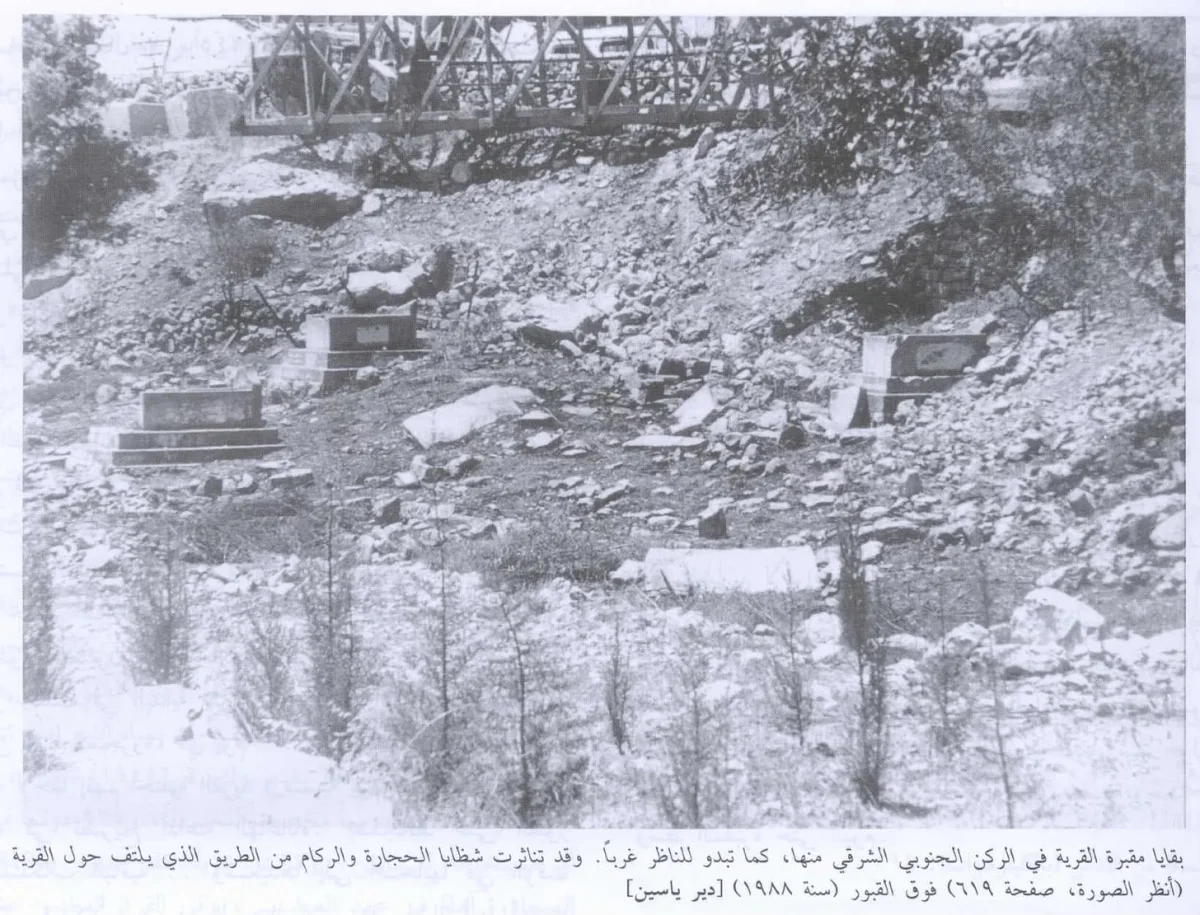
One is an act of war. The other is an act against memory.
In 1953, construction began on Yad Vashem, the World Holocaust Remembrance Center, and it has grown across Mount Herzl into one of the world’s most influential memorial institutions. It holds archives, monuments, sculpture gardens, research centers, and museums dedicated to preserving the memory of Jewish victims of the Nazi genocide. Governments send their leaders there. It is a place of genuine grief and genuine power.
It looks directly at Deir Yassin.
One story has become part of the world’s moral vocabulary. The other survives largely through historians, descendants, and those willing to go looking for it.
This is Jerusalem. Space here carries memory, politics, and intention. What is marked matters. What is left unmarked matters too. The placement of Yad Vashem, the absence of any marker at Deir Yassin, and the reality that one side of the valley has become a site of international pilgrimage while the other remains largely unacknowledged together create a geography of memory that is difficult to ignore.
On one side of the valley, the world is taught Never Forget.
On the other side, the world is urged to forget.
The organizations that carried out the massacre at Deir Yassin were Zionist paramilitary organizations. That is not a rhetorical choice. It is the historical record. It is how the organizations described themselves and how they are described in the historical literature.
The fact that this even requires explanation says something about the moment we’re living in. “Zionist” is not being used here as an insult. It is the historically accurate description of the organizations that carried out the massacre. History does not become antisemitic because it is uncomfortable.
What Deir Yassin established was not just a precedent for violence. It established a precedent for impunity. The men responsible entered government. The militias became part of the state’s security institutions. The village disappeared while the state endured. Impunity, once embedded in institutions, does not remain in 1948.
For many Palestinians, the Nakba is not understood as an event that ended in 1948 but as a continuing process that has changed form over time. The mass displacement, the destruction of communities, the struggle over memory, and the recurring experience of losing homes, family members, and the certainty of tomorrow are not confined to history books. They are experiences many Palestinians in Gaza continue to endure today.
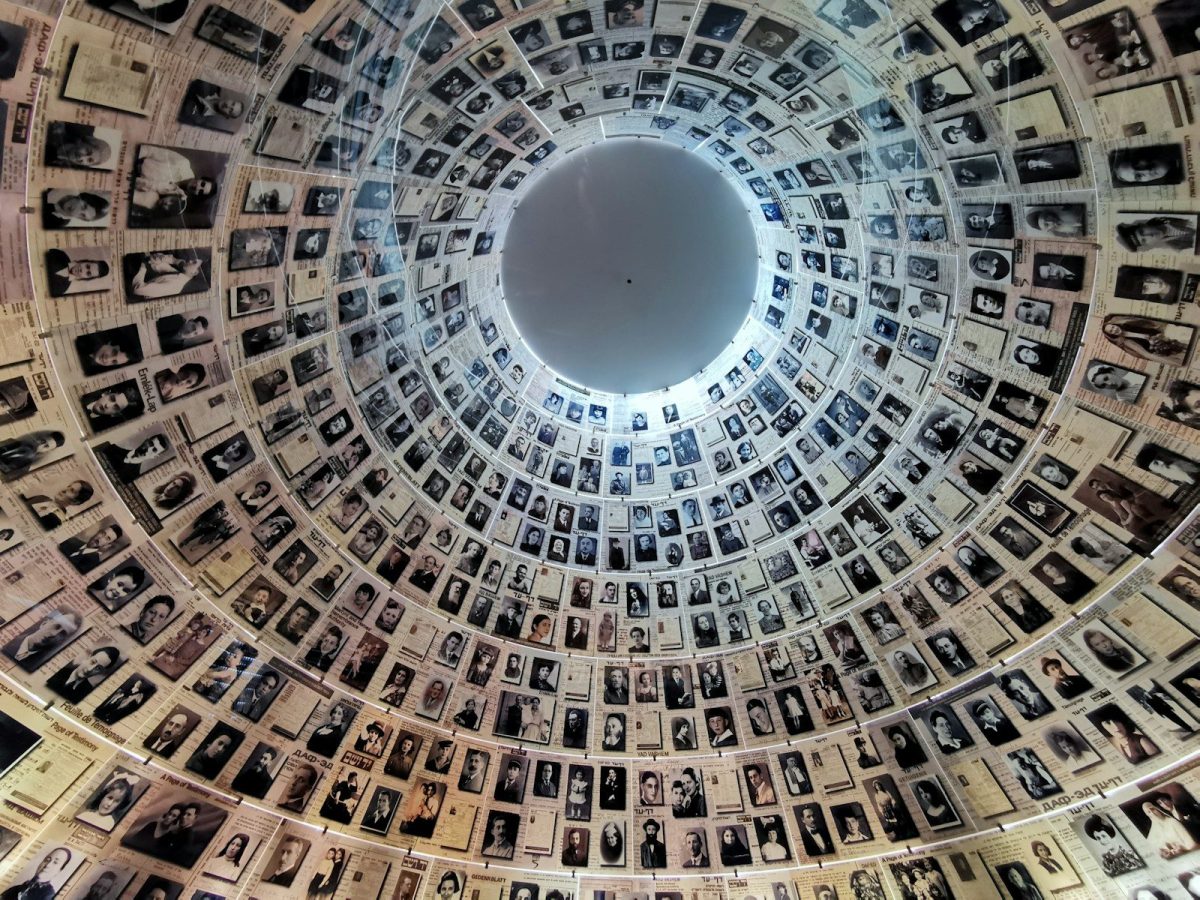
That is why the valley between Yad Vashem and Deir Yassin is more than geography. It is a moral question. It asks whether memory is something we inherit only for ourselves, or whether it carries obligations beyond our own suffering.
What does Never Again actually mean?
If it means never again to us, it is a tribal claim, not a moral one. If it means never again to anyone, then the people who built that museum inherit a moral question that reaches beyond its walls.
You cannot memorialize the children whose names echo in a dark room while leaving unacknowledged the children who died within view of that memorial. You cannot build your foundational story on Never Forget while your founding massacre remains unmarked, its cemetery beneath a highway, its houses repurposed, and its history unknown to most who stand nearby.
You cannot ask the world to remember your dead while refusing to remember those buried beneath your own foundation.
What is happening in Gaza is not a single morning. It has been years of bombardment, displacement, starvation, and mass death. The numbers are not abstract. The children are not abstract. The sequence feels painfully familiar. An attack. Conflicting accounts. Denials. Arguments over numbers instead of lives. Questions about whether the victims somehow deserved what happened. Then attention shifts while survivors bury the dead.
The world was taught to watch. The world was taught, at places like Yad Vashem, that silence is complicity.
There is an organization called Deir Yassin Remembered, founded by Jewish theologians and scholars, that has spent decades trying to build a memorial at the site. Israel has not permitted it. There are no markers. There are no signs. Visitors leave the Holocaust History Museum, blink in the Jerusalem light, look across the valley and many only see a hillside.
I have been there. Visitors drifted past speaking different languages, taking photographs before walking back toward the museum. Across the valley, Deir Yassin remained almost invisible unless you already knew where to look.
The radio operator’s words have stayed with me. He was counting the dead of Deir Yassin in April 1948, reporting back to his commanders, and at some point the number became too large, the method too brutal, and the bodies too many to keep tallying neatly. The message changed. It became: “It’s difficult to count.”
In Gaza, they are still counting. And the world that built a museum to teach itself never to look away is, again, looking away.
The valley is still there. The hill is still there. The names that are not read, the candles that are not lit, the children for whom no room was built. They are still there too.
What would it mean to actually believe in Never Again? It might start with standing in that light, looking across that valley, and finally saying the name of what is there.
It might mean that Never Again means everyone.

