


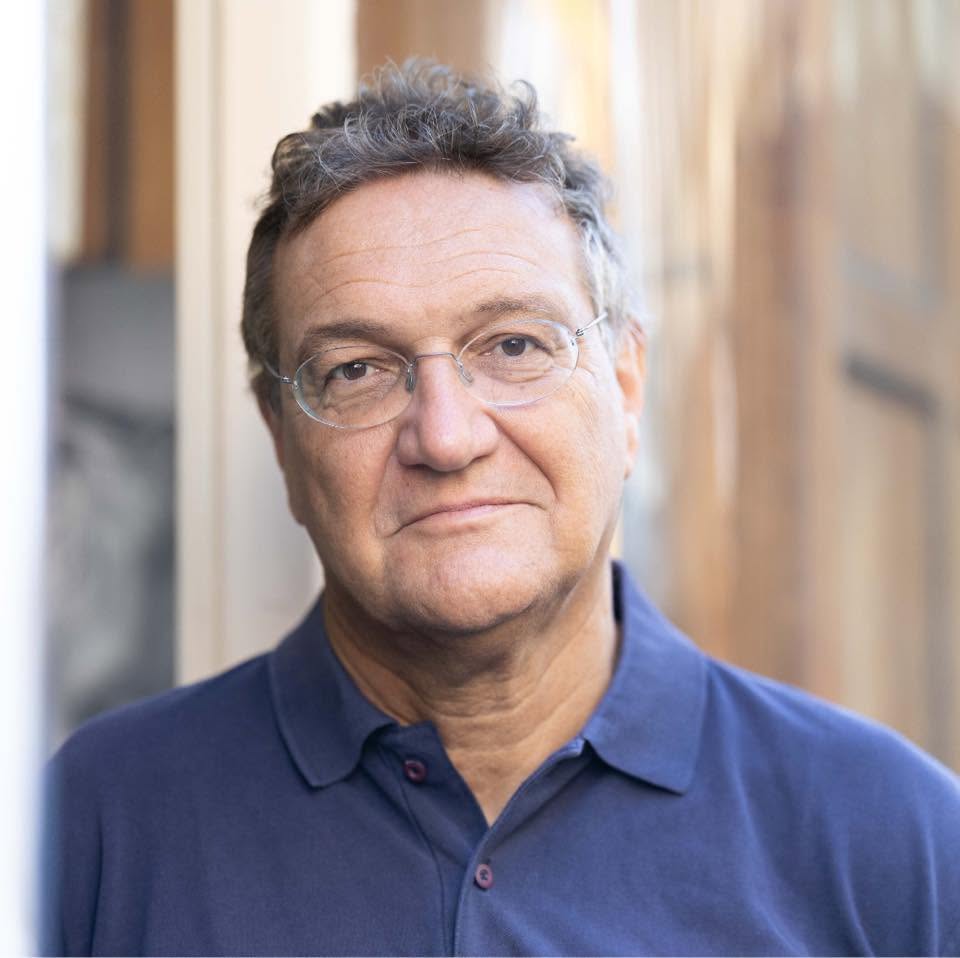
ORF’s Decision Not to Extend Karim El-Gawhary’s Contract Raises Concerns Over Independent Middle East Reporting
Vienna — The Austrian public broadcaster ORF has decided not to extend the contract of its long-serving Middle East correspondent, Karim El-Gawhary, ending more than two decades of his leadership of the broadcaster’s Cairo bureau. The decision has sparked widespread debate among journalists, media organizations, and members of the public over the future of independent reporting from Palestine and the broader Middle East. (news.ORF.at)
El-Gawhary has been ORF’s principal correspondent covering the Arab world since 2004. Based in Cairo, he has reported on major events including the Iraq War, the Arab Spring, conflicts in Syria, and most recently Israel’s military campaign in Gaza. Over the years he became one of Austria’s most recognized foreign correspondents, receiving numerous awards for his reporting and analysis. (epd medien)
With the expiration of his contract in June 2026, ORF will effectively lose the journalist who has been its primary on-the-ground reporter covering Palestinian territories and the wider Arab region from an Arab capital. While ORF has stated that El-Gawhary may continue contributing as a freelancer and announced plans to establish a new Middle East bureau elsewhere in the region, the broadcaster has not indicated that a permanent successor with equivalent regional expertise will replace him in Cairo. ORF described the restructuring as part of a broader modernization of its international correspondent network and cited a “generational transition.” (news.ORF.at)
The announcement immediately generated controversy because it followed months of organized criticism directed at El-Gawhary over his reporting on the Gaza war. His coverage was repeatedly attacked by political actors and coordinated social media campaigns alleging that his reporting was overly critical of Israel. Supporters argue that many of those attacks reflected discomfort with factual reporting from Gaza rather than evidence of journalistic bias. (Kurier)
El-Gawhary himself has said that the decision came as a surprise. In interviews following his departure, he explained that ORF officially cited generational renewal but acknowledged that public speculation quickly connected the decision to the sustained campaigns against his reporting. He has stated that ORF never explicitly told him political pressure played a role, but noted that the timing inevitably fueled such interpretations. (DER STANDARD)
The decision prompted significant public support. A petition calling for ORF to retain El-Gawhary attracted more than 20,000 signatures, while former ORF journalists and civil society organizations publicly urged the broadcaster to extend his contract and preserve the Cairo bureau as an independent center for Middle East reporting. Critics argued that reducing ORF’s permanent journalistic presence in the Arab world risks narrowing Austrian audiences’ access to first-hand reporting from Palestine and neighboring countries. (Kleine Zeitung)
The debate extends beyond one journalist. Media observers have questioned whether public broadcasters can maintain editorial independence when correspondents covering highly polarized conflicts become the target of sustained political campaigns. International journalist organizations have warned that attacks on foreign correspondents increasingly seek not only to discredit individual reporters but also to discourage nuanced reporting from conflict zones. (epd medien)
Although ORF maintains correspondents in Israel and has announced plans for a new regional bureau, El-Gawhary’s departure marks the end of an era in which Austria maintained a highly experienced permanent correspondent reporting from Cairo with decades of relationships throughout the Arab world. For many observers, the concern is not simply the loss of one journalist but the potential reduction of independent reporting from Palestine and the wider Middle East at a time when accurate, on-the-ground journalism remains essential.
Austria’s public broadcaster has long reflected the country’s evolving approach to the Israeli-Palestinian conflict. During the Bruno Kreisky era of the 70s, ORF operated within a political climate in which Austria positioned itself as a bridge between Israel and the Arab world. Kreisky was the first Western leader to officially receive PLO Chairman Yasser Arafat and argued that lasting peace required recognition of Palestinian national aspirations alongside Israel’s security. ORF’s Middle East reporting during that period generally reflected Austria’s diplomatic emphasis on dialogue, international law, and engagement with Palestinian representatives.
In recent years, however, critics argue that ORF’s editorial tone has increasingly aligned with mainstream Western and pro-Israeli narratives, particularly following the October 2023 Hamas attacks. The decision not to renew the contract of veteran Middle East correspondent Karim El-Gawhary—widely regarded as one of Austria’s most experienced journalists reporting from the Arab world—has therefore been interpreted by some media observers as symbolic of a broader shift away from the balanced, bridge-building tradition associated with the Kreisky era.
ORF rejects suggestions that political considerations influenced the decision, describing it instead as part of a generational restructuring of its foreign correspondent network.
About Karim El-Gawhary
Karim El-Gawhary is a German-Egyptian journalist who served as ORF’s Middle East correspondent for more than 22 years. Throughout his career he reported from conflict zones across the region and became widely respected for explaining the political and humanitarian realities of the Arab world to German-speaking audiences. Following the end of his ORF contract, he continues his journalistic work through independent reporting and his podcast Nahost. Nah dran. (Apple Podcasts)

